

For many women struggling with fertility, one of the most common terms they hear is AMH or Anti-Müllerian Hormone. Low AMH levels can sound alarming, but with the right guidance and treatment, pregnancy is still possible. At Genesis IVF Fertility Hospital in Salem, we help women navigate this condition with hope and clarity.
What Is AMH?
AMH is a hormone produced by the ovarian follicles and is a key indicator of a woman's ovarian reserve the number of eggs left in the ovaries. A low AMH level usually signals a reduced egg count, which may impact fertility, especially in women over 35.
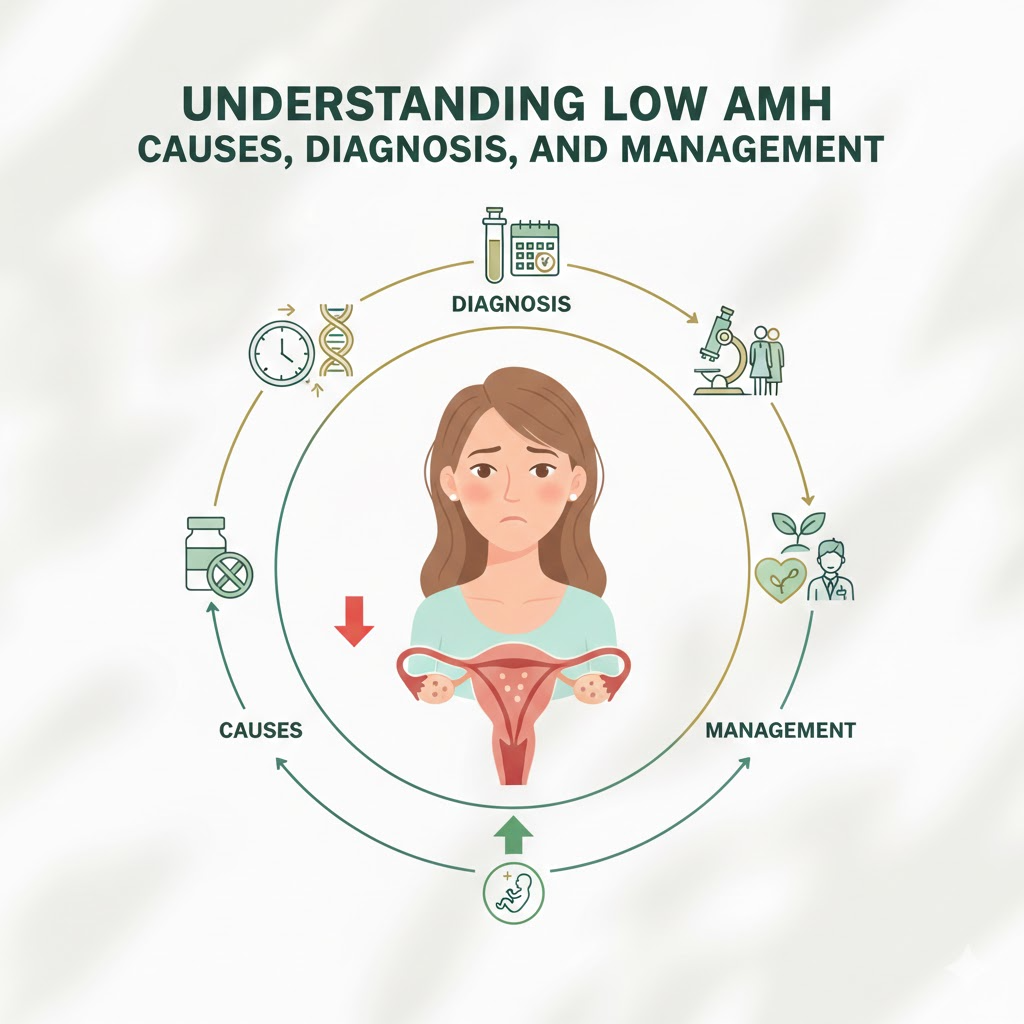
Causes of Low AMH
Low AMH can occur due to several reasons, including:
- Age-related decline in egg reserve
- Genetic factors or family history of early menopause
- Autoimmune conditions
- Previous ovarian surgery or chemotherapy
- Lifestyle factors, such as smoking or extreme stress
How Is Low AMH Diagnosed?
A simple blood test can measure AMH levels. At Genesis IVF, we combine AMH testing with other fertility assessments like antral follicle count (AFC) and ultrasound scans to get a full picture of your reproductive health.
Management and Treatment Options
Low AMH doesn’t mean the end of the road. With the right fertility strategy, many women conceive successfully. Treatment options include:
- Mild stimulation IVF protocols
- Donor egg IVF for very low AMH cases
- Lifestyle changes and nutritional support
- Use of DHEA supplements (as per doctor’s advice)
At Genesis IVF, we customize every treatment plan to suit your unique fertility profile, ensuring the best possible results.
Final Thought
A low AMH diagnosis can be emotionally challenging, but it’s not a full stop. It’s a signal to act with awareness and expert support. At Genesis IVF Fertility Hospital, Salem, we combine science, care, and compassion to help you build the family you dream of.