

For couples trying to conceive, one of the most important fertility questions is: “How long do sperm stay alive inside the uterus?”
At Genesis IVF Clinic, many couples ask this when they begin their pregnancy journey. Understanding sperm lifespan helps you plan intercourse at the right time, increase conception chances, and know when to seek support if needed
How Long Can Sperm Live Inside the Uterus?
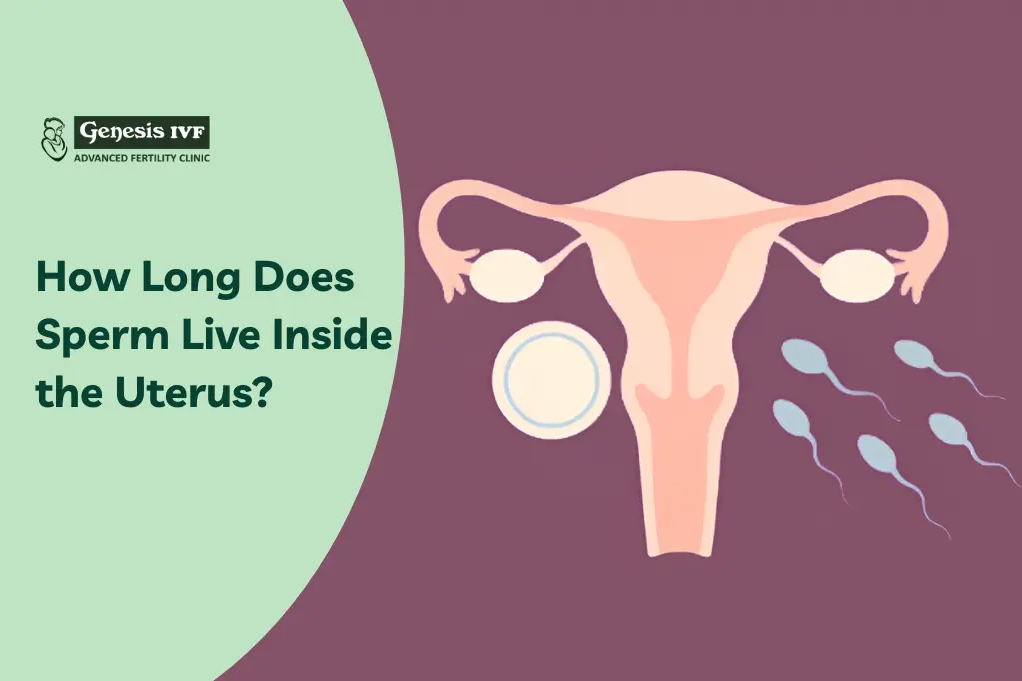
Healthy sperm can survive inside the uterus for 3-5 days, and in rare ideal conditions, sometimes up to 7 days. This means intercourse even days before ovulation can lead to pregnancy because sperm stay alive long enough to meet the egg when it releases.
How Pregnancy Actually Happens: The Journey of Sperm
After ejaculation, millions of sperm enter the vagina, but only hundreds reach the uterus, and barely a few dozen make it near the egg. Here’s what happens inside:
1. Surviving the Vaginal Environment
The vagina is naturally acidic. Most sperm do not survive here. Ovulation changes the vaginal environment, making it more sperm-friendly.
2. Cervix Support
During your fertile days, cervical mucus becomes thin and stretchy. This mucus protects sperm and helps them swim upward. This is when sperm live the longest.
3. Entering the Uterus & Fallopian Tubes
Once sperm reach the uterus, they are protected and can stay alive for several days, waiting for ovulation. Fertilization happens only when a healthy sperm meets the egg in the fallopian tube.
What Affects Sperm Survival Inside the Uterus?
1. Ovulation Timing
If intercourse happens during the fertile window (5 days before ovulation + ovulation day), sperm survival is highest.
2. Cervical Mucus Quality
Stretchy, clear mucus helps sperm live longer. Thick or dry mucus reduces survival.
3. Sperm Quality
Low count, low motility, or abnormal shapes reduce how long sperm stay alive inside the uterus.
4. Hormone Imbalances or Health Conditions
PCOS, thyroid issues, endometriosis, or pelvic infections can reduce sperm survival.
5. Lifestyle Factors
Smoking, alcohol, stress, obesity, poor sleep, and heat exposure affect sperm lifespan.
Signs That Sperm May Not Be Surviving Long Enough
- You may need an evaluation if you experience:
- Irregular or unpredictable cycles
- Very low or no cervical mucus
- Painful periods or pelvic discomfort
- History of pelvic infections
- Known male sperm abnormalities
- Difficulty conceiving for 6–12 months
- Early evaluation helps improve pregnancy chances.
How to Improve Sperm Survival and Increase Chances of Pregnancy
Step 1: Track Your Ovulation Accurately
The fertile window includes the 5 days before ovulation day. Ways to track ovulation:
- Ovulation predictor kits
- Follicular scan (more accurate)
- Basal body temperature charting
- Monitoring cervical mucus
Step 2: Improve Sperm Quality Naturally
For men, we advise:
- Zinc, folic acid, vitamin C & D
- Avoid laptops on the lap
- Stop smoking
- Maintain normal BMI
- Reduce stress
- Sleep 7–8 hours
Even small improvements can increase pregnancy chances.
Step 3: Have Timed Intercourse
Best recommended days:
Day -5
Day -4
Day -3
Day -2
Day -1
Day 0 (ovulation day)
This ensures sperm are waiting when the egg releases.
Step 4: Get a Fertility Test After 6-12 Months of Trying
If you are:
Under 35 – test after 12 months
Above 35 – test after 6 months
Irregular periods – test immediately
Known male sperm issues – test immediately
Genesis IVF offers:
- Semen analysis
- AMH testing
- Ovulation tracking
- Ultrasound scan
- Pelvic scan
Early testing improves your chances dramatically.
Step 5: Consider Fertility Treatments if Needed
When sperm survival or motility is low:
IUI
IVF
ICSI
Sperm DNA fragmentation testing
Male fertility optimization program
These treatments increase the chances of sperm reaching the egg.
When Should You See a Fertility Specialist?
Visit Genesis IVF if you experience:
Trying for >6-12 months without success
Irregular or absent periods (learn more about menstrual health and cycle regulation in our guide on how to get periods fast.
Known sperm abnormalities
PCOS or endometriosis
Recurrent pregnancy loss
Age above 35
Our specialists use evidence-based fertility care to guide you.