


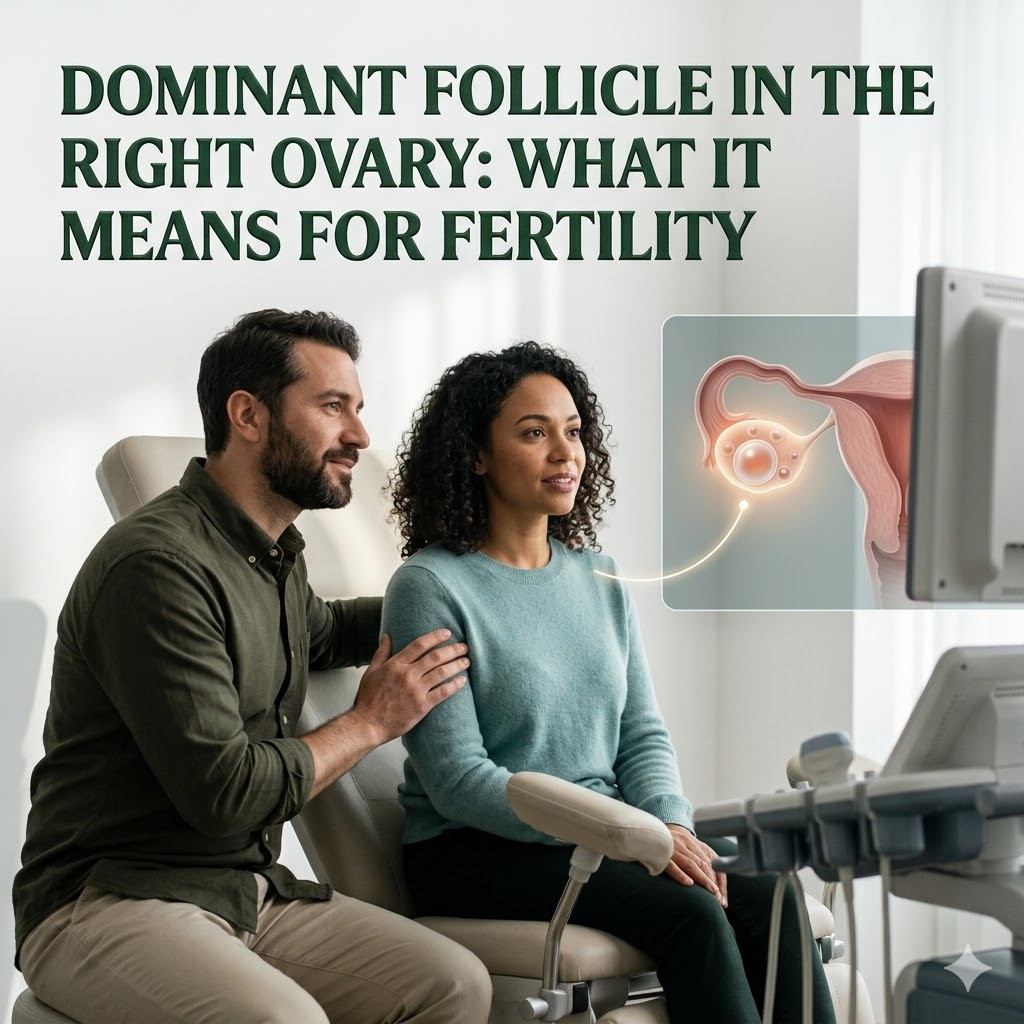
During fertility evaluation or routine ultrasound monitoring, many women are told they have a “dominant follicle in the right ovary.” While the term may sound technical, it is usually a positive sign. A dominant follicle indicates that your ovary is preparing to release a mature egg, which is essential for natural conception. Understanding what this means can help couples feel more confident about their reproductive health journey. At Genesis IVF Fertility Hospital in Salem, follicular monitoring is a key part of fertility assessment and treatment planning.
What Is a Follicle?
A follicle is a small fluid-filled sac inside the ovary that contains an immature egg. Every month, several follicles begin to develop under the influence of hormones. However, in most natural cycles, only one follicle becomes dominant. This dominant follicle grows larger than the others and eventually releases a mature egg during ovulation.
The presence of a dominant follicle in the right ovary simply means that ovulation is likely to occur from that side in the current menstrual cycle. Ovulation can alternate between ovaries, but it does not have to follow a strict pattern.
Why Is the Dominant Follicle Important?
The dominant follicle plays a central role in fertility. As it grows, it produces estrogen, which thickens the uterine lining in preparation for possible pregnancy. When the follicle reaches an appropriate size—usually around 18 to 24 millimeters it ruptures and releases the egg into the fallopian tube.
If sperm are present during this fertile window, fertilization can occur. Therefore, identifying a dominant follicle helps doctors determine the most fertile days for natural conception or timed intercourse.
Does the Right Ovary Matter?
Many women ask whether ovulating from the right ovary is better or worse than the left. In reality, both ovaries function similarly, and there is no significant difference in pregnancy chances based on which side releases the egg. What matters most is the quality of the egg, the health of the fallopian tubes, and the timing of intercourse.
However, if a woman has a blocked fallopian tube on one side, the ovary that releases the egg becomes more relevant. For example, if the right fallopian tube is healthy and the dominant follicle is in the right ovary, the chances of natural conception improve.
Dominant Follicle in Fertility Treatments
In fertility treatments such as ovulation induction or IVF, monitoring follicle growth is crucial. Doctors use ultrasound scans to track the number and size of developing follicles. In ovulation induction cycles, medication may help stimulate one or more follicles to mature.
For IVF procedures, multiple follicles are encouraged to grow so that several eggs can be retrieved. However, in natural conception cycles, a single dominant follicle is usually ideal.
At Genesis IVF Fertility Hospital in Salem, advanced ultrasound monitoring allows precise tracking of follicle development. This helps optimize timing for conception and improves overall success rates.
When Should You Be Concerned?
Having a dominant follicle is generally a healthy sign. However, concerns may arise if:
· No dominant follicle develops (anovulation)
· The follicle does not rupture (luteinized unruptured follicle syndrome)
· Follicle growth is irregular or too slow
· Hormonal imbalance affects ovulation
Conditions such as PCOS, thyroid disorders, or hormonal fluctuations may interfere with proper follicle development. In such cases, medical guidance is essential.
Conclusion
A dominant follicle in the right ovary is usually a reassuring indicator that your body is preparing for ovulation. It reflects healthy ovarian function and signals a fertile window for conception. The side of ovulation does not significantly affect pregnancy chances, provided both fallopian tubes are healthy. If you are trying to conceive and have questions about follicle growth or ovulation timing, expert evaluation can make a difference. At Genesis IVF Fertility Hospital in Salem, we provide personalized fertility care, advanced monitoring, and evidence-based treatments to support your journey toward a successful pregnancy.