


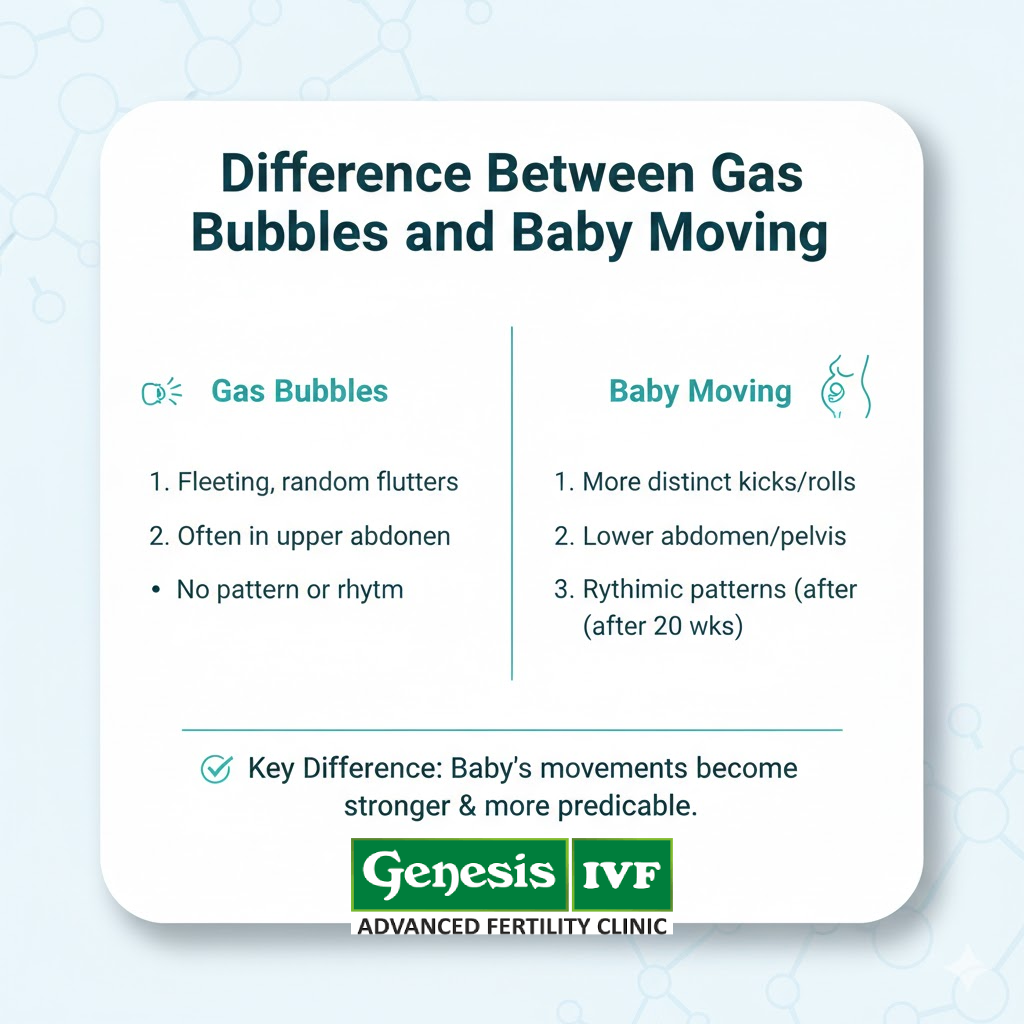
Feeling something flutter in your belly during pregnancy can be exciting—but also confusing. Is it your baby moving, or just gas bubbles? At Genesis IVF Fertility Hospital in Salem, we help expectant mothers understand the subtle signs of fetal movement and how to differentiate them from normal digestive sensations. Recognizing the difference is an important part of bonding with your baby and monitoring a healthy pregnancy.
Understanding Early Sensations in Pregnancy
During the second trimester, many women begin to notice new sensations in their abdomen. These can include:
- Light flutters
- Gentle taps
- Rolling or shifting feelings
- Gurgling or bubbling sensations
While both gas and fetal movement can feel similar at first, there are key differences that help you tell them apart.
What Are Gas Bubbles?
Gas bubbles are caused by digestion and the movement of air through the intestines. They are:
- Random and Irregular: Not patterned or rhythmic
- Often Accompanied by Sounds: Gurgling or rumbling noises
- Linked to Digestion: May occur after eating or drinking
- Can Be Relieved: Passing gas or changing position often helps
Gas bubbles are common throughout pregnancy due to hormonal changes that slow digestion.
What Does Baby Movement Feel Like?
Fetal movement, also known as “quickening,” typically begins between 18–22 weeks of pregnancy. It may feel like:
- Gentle Flutters or Taps: Especially in early stages
- Consistent Patterns: Movements often occur at similar times each day
- No Digestive Sounds: Unlike gas, baby kicks are silent
- Responsive to Stimuli: You may feel movement after eating, resting, or hearing loud sounds
As your pregnancy progresses, movements become stronger and more defined like kicks, rolls, and stretches.
When to Expect Baby Movements
- First-Time Mothers: Usually between 20–22 weeks
- Experienced Mothers: May notice movement as early as 16–18 weeks
- Twins or Multiples: Movements may be felt earlier and more frequently
If you’re unsure whether you’re feeling gas or your baby, keep a journal of the sensations. Over time, patterns will emerge that help you identify true fetal activity.
When to Contact Your Doctor
While occasional confusion is normal, you should contact your fertility specialist if:
- You haven’t felt any movement by 24 weeks
- Movements suddenly decrease or stop
- You experience severe abdominal pain or unusual symptoms
At Genesis IVF Salem, we offer advanced prenatal monitoring to ensure both mother and baby are healthy throughout pregnancy.
How Genesis IVF Salem Supports Expectant Mothers
Our comprehensive maternity care includes:
- Ultrasound Scans: To track fetal growth and movement
- Prenatal Counseling: To educate mothers on pregnancy milestones
- 24/7 Support: For questions and concerns during pregnancy
- Customized Care Plans: Based on your health and pregnancy stage
We’re here to guide you through every flutter, kick, and milestone with confidence and care.
Conclusion
Distinguishing between gas bubbles and baby movement is a joyful part of pregnancy. As your baby grows, those gentle flutters will become unmistakable signs of life. At Genesis IVF Fertility Hospital in Salem, we’re honored to walk beside you on this incredible journey helping you understand your body, your baby, and your path to parenthood.