
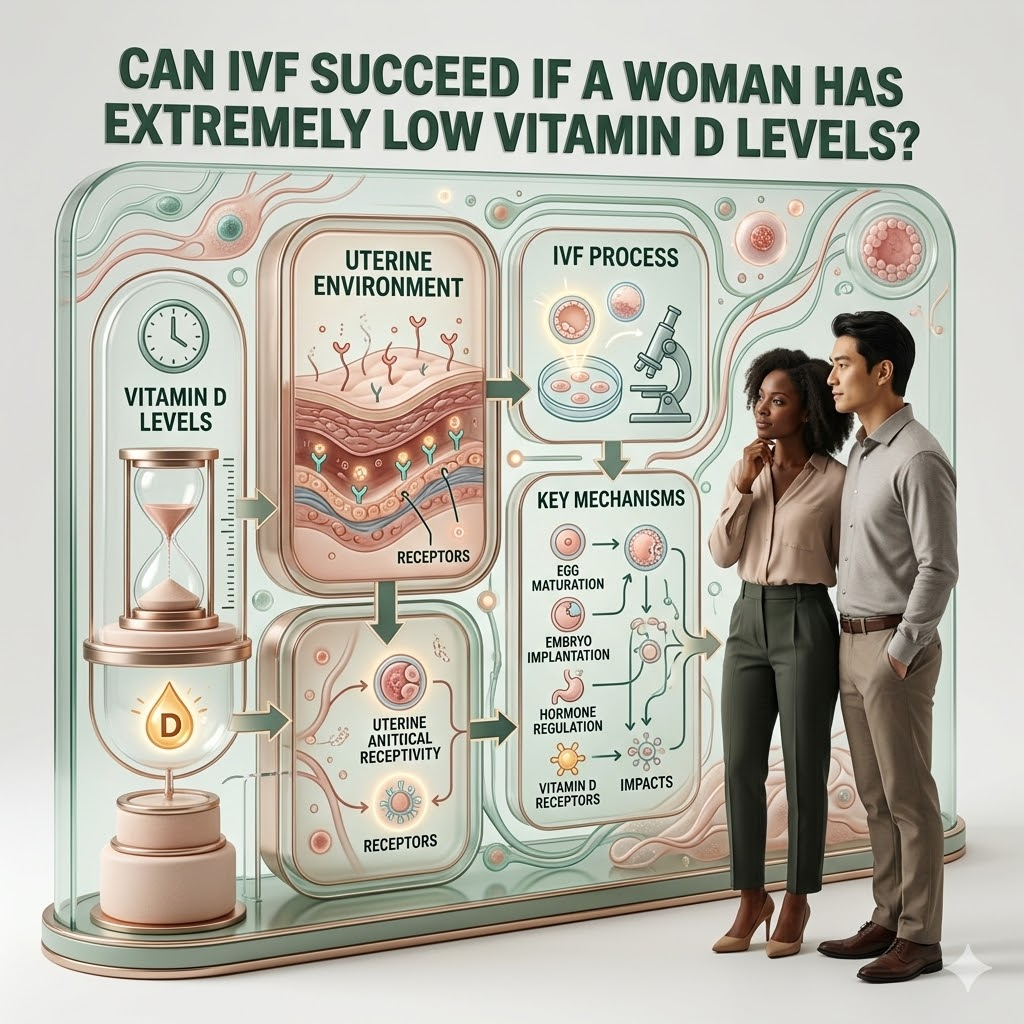
Vitamin D plays a crucial role in overall health, but many women are unaware that it also influences reproductive health — especially during fertility treatments. This raises an important question among IVF patients: Can IVF succeed if a woman has extremely low vitamin D levels?
How Vitamin D Affects Fertility
Vitamin D acts like a hormone in the body and supports the reproductive system in multiple ways:
• Helps the ovaries produce quality eggs
• Improves embryo development during IVF
• Supports proper implantation of the embryo inside the uterus
• Maintains healthy hormone levels for pregnancy
Low vitamin D levels may not directly stop IVF from working, but many studies show that women with severely low vitamin D are more likely to experience lower ovarian response, poor embryo quality, and reduced implantation success.
Can IVF Still Work With Low Vitamin D?
Yes — IVF can still succeed even when vitamin D is low, but the chances of success may decrease. Women with very low vitamin D may still become pregnant, but they may require:
• Increased medical support
• Additional embryo transfers
• Lifestyle or dietary modifications
Improving vitamin D levels before starting IVF can significantly boost success rates and pregnancy outcomes.
How to Improve Vitamin D Levels Naturally
Women preparing for IVF can increase their vitamin D through simple steps:
• Morning sunlight exposure (10–20 minutes daily)
• Vitamin D–rich foods such as eggs, milk, fish, mushrooms, and fortified cereals
• Doctor-recommended supplements when levels are very low
• Regular monitoring of vitamin D levels during IVF treatment
A balanced vitamin D level supports a healthy uterine environment and improves the chance of a healthy pregnancy.
Conclusion
While IVF can still succeed even if a woman has extremely low vitamin D levels, correcting the deficiency can dramatically increase the chances of implantation, reduce complications, and support a smoother pregnancy. At Genesis IVF Fertility Hospital in Salem, we evaluate every patient’s nutritional and hormonal status to provide personalized treatment that maximizes IVF success.